
Kian Hozouri, COO and co-founder of ByteBrew, shared in his Game World Observer column how his startup helped The One Game Studio achieve impressive results in ROAS and Ad LTV growth.
Kian Hozouri
The One Game Studio is a talented Hanoi-based mobile game publisher with a growing team of more than 60 employees and a portfolio of over 70 casual, music, and puzzle games that attract a global audience. What is particularly noteworthy is that its catalog of fast-iterating, ad-monetized titles is exactly the kind of high-velocity portfolio that benefits most from connected cross-promotion.
The company approached us with a specific challenge. The audience for its games was concentrated in a handful of top-performing titles, while higher-LTV games within the same portfolio reached only a fraction of that audience. Both the source and destination titles generated approximately 95% of their revenue through advertising. Routing the right users to higher-LTV destination games without disrupting the source app’s ad stack was a challenge that existing channels could not solve.
The One Game Studio hoped we could help address this issue. The team was eager to test ByteBrew Ads, powered by Ctrl AI. Before diving into the results, it is worth explaining how the solution works.
- Ctrl identifies the highest-value users in the source app and routes them to the highest-LTV destination app within the portfolio.
- For every ad opportunity, Ctrl evaluates user value and opportunity cost in real time. It determines when to redirect high-value users who meet campaign targets while allowing standard mediation flows to continue whenever those targets are not met. As a result, Ctrl AI acts as a predictive scalpel, helping publishers keep their most valuable users within their own portfolio.
- Most advertising networks require lengthy optimization periods for each new campaign. Ctrl is pre-trained on petabytes of live app data, eliminating the cold-start problem. From day one, it routes high-value users to the most suitable high-LTV destination within the portfolio.
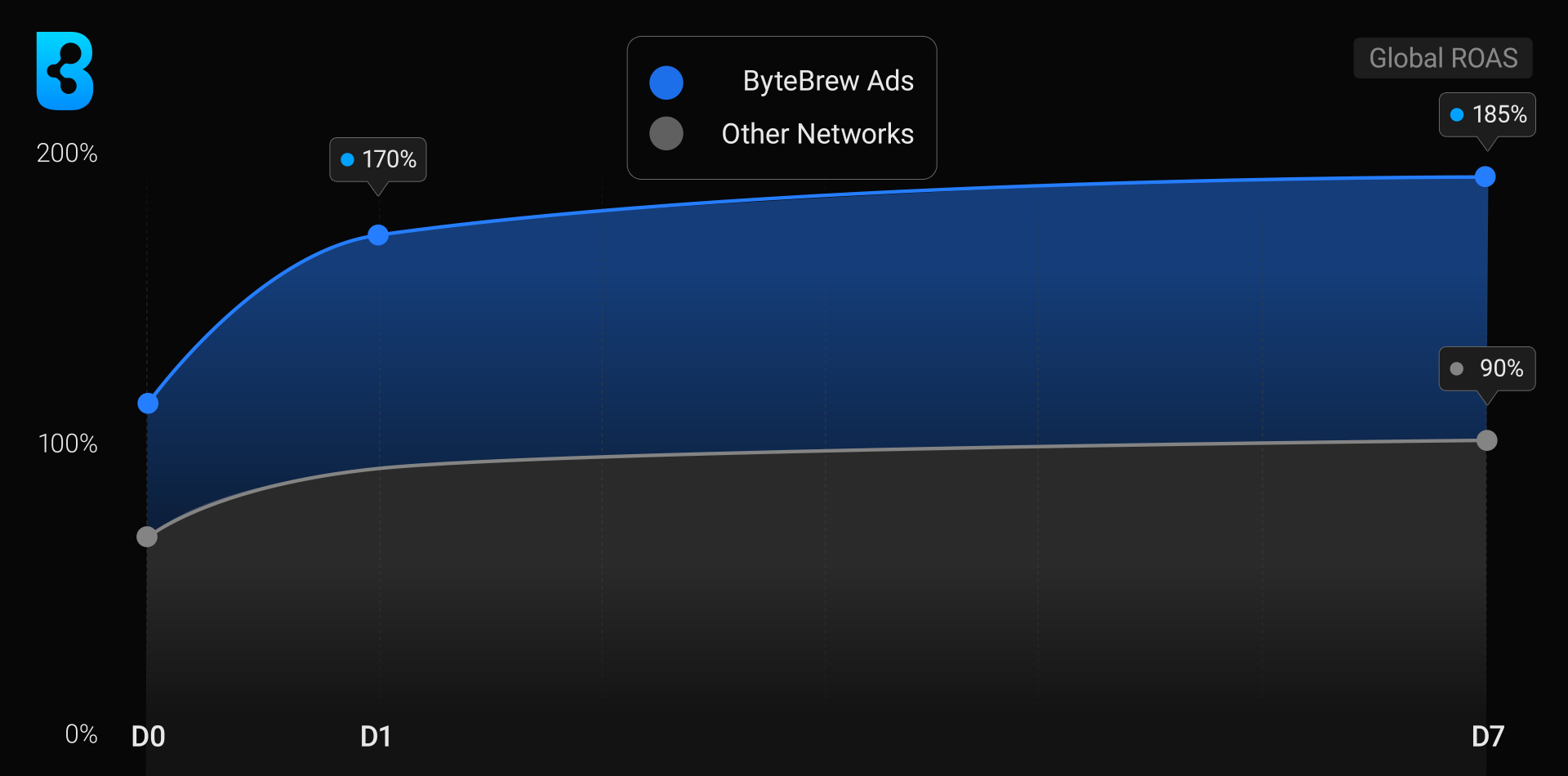
The campaign achieved a global D1 ROAS of 170%, reaching profitability from Day 1.
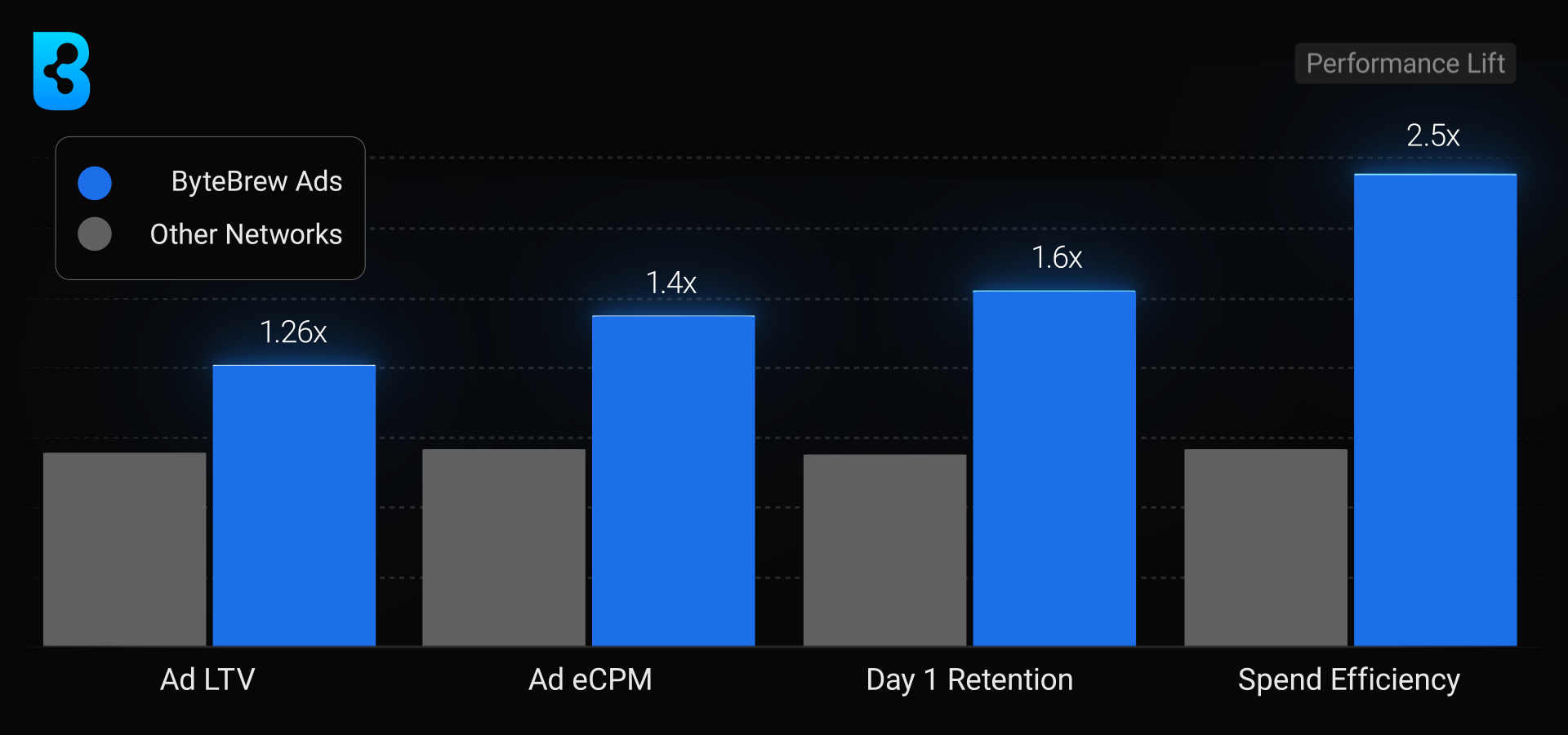
Ctrl routed users that delivered 1.26x user Ad LTV in the destination compared to the source app. Ctrl users produced 1.4x Ad eCPM per impression in the destination app and retained 1.6x the destination’s blended Day 1 rate.
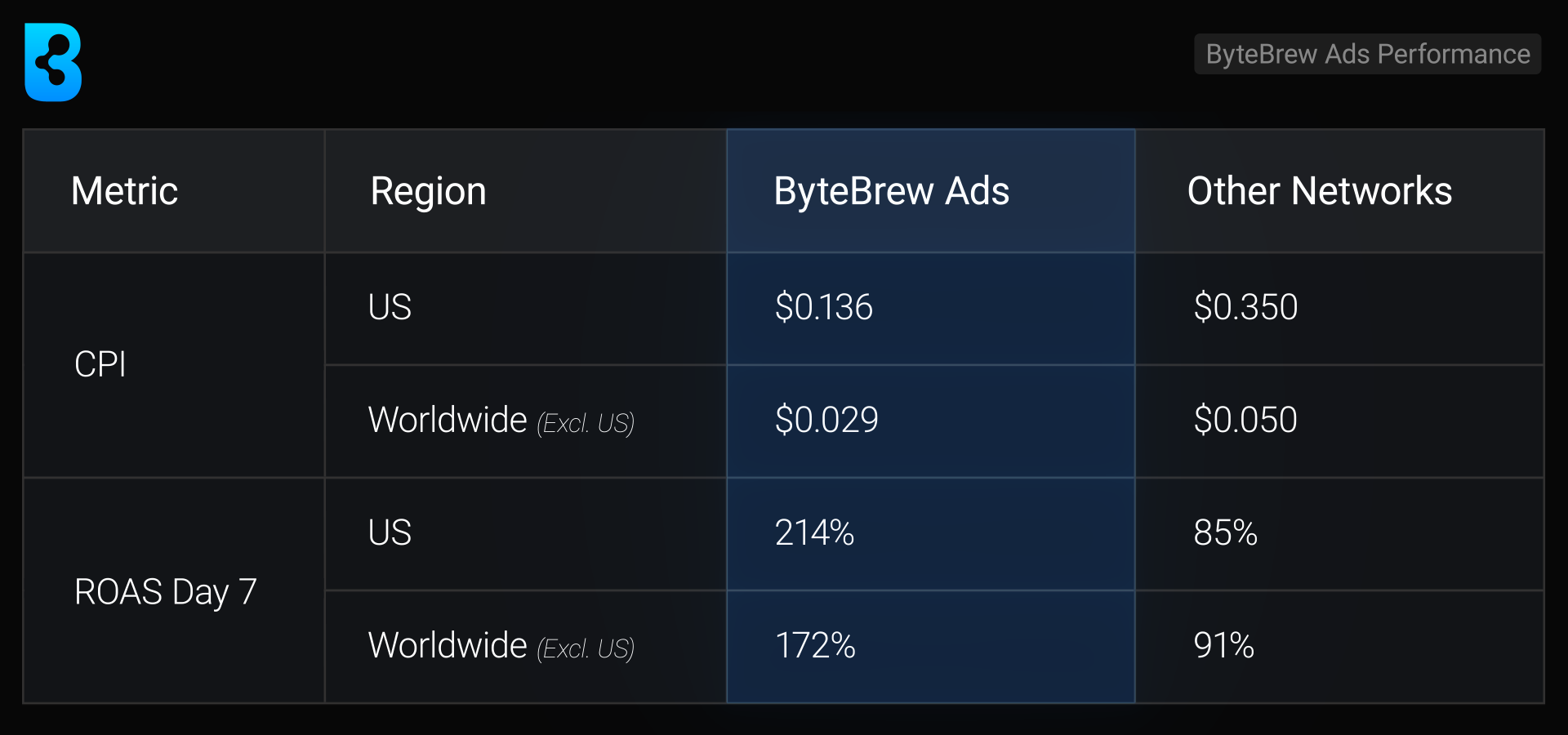
Ctrl acquired users across more than 100 countries at an average CPI of $0.04, delivering up to 2.5x greater efficiency than open-market user acquisition, even in the most expensive markets.
The entire portfolio benefited, not just the destination app. For every unit of source ad value targeted by Ctrl, the destination generated 1.7x in new ad value globally within the first day, increasing to 1.85x by Day 7 as the cohort matured. Destination gains exceeded source opportunity costs on a fully amortized basis, increasing overall portfolio ad value.
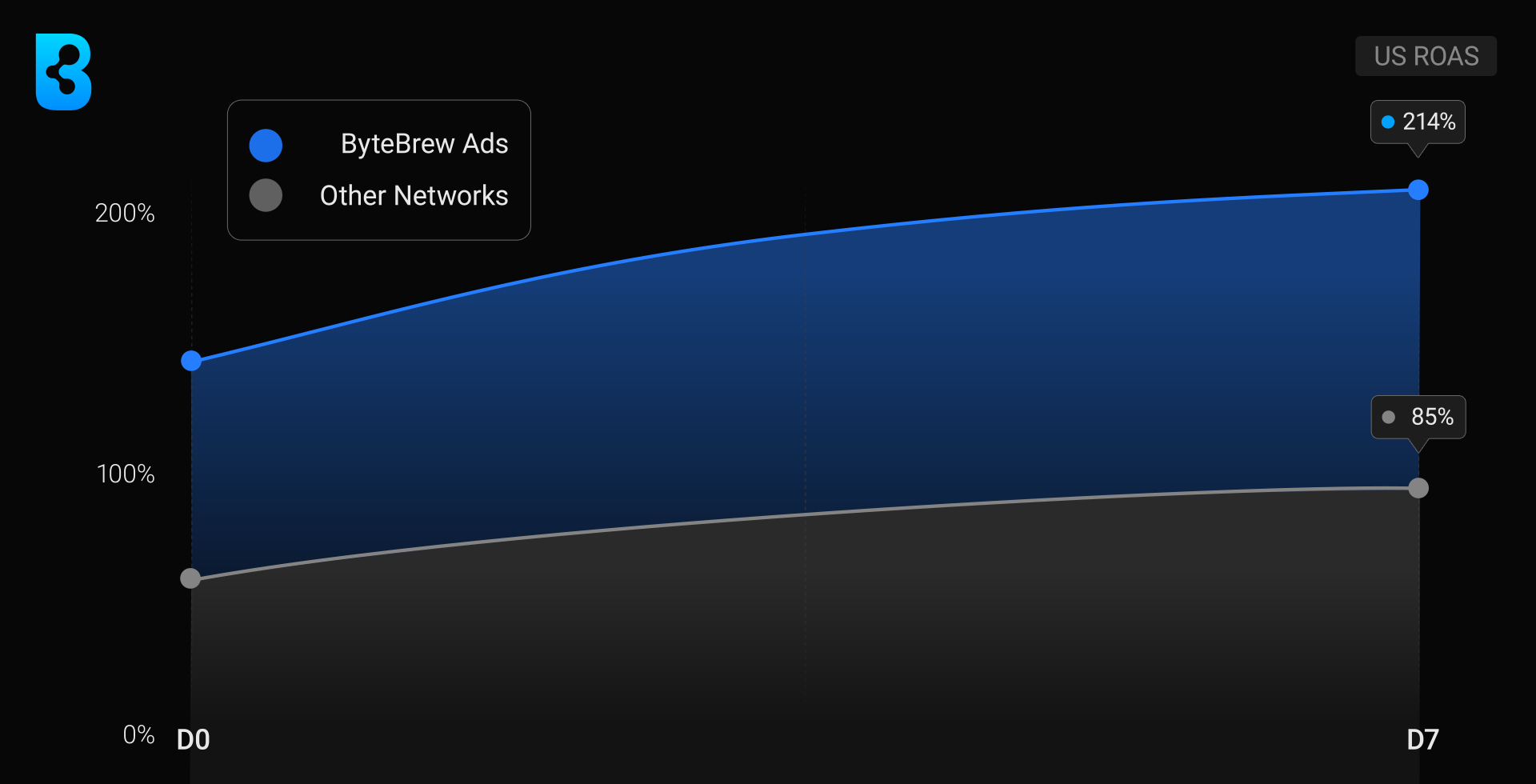
At a CPI of just $0.04, Ctrl acquired users at a fraction of open-market user acquisition costs, making portfolio routing a significantly more efficient path to high-value installs than purchasing the same users through traditional channels. In the most expensive markets, Ctrl’s acquisition costs were more than 2.5x lower than open-market alternatives, delivering 200% ROAS by Day 1, while paid user acquisition campaigns had not yet recovered their costs by Day 7.
This enabled The One Game Studio to grow the destination app’s audience without relying solely on unprofitable acquisition channels and freed up budget that could be redistributed across the portfolio. As new portfolio apps came online, these efficiency gains continued to compound.
These results surprised even us. Achieving positive ROAS from Day 1 with a low CPI while increasing overall portfolio value is exactly the kind of outcome every publisher hopes for. Smart AI-powered cross-promotion helped us unlock value that traditional UA channels couldn't deliver as efficiently. In mobile gaming, growth comes from continuous testing. Test, learn, iterate, and test again. You'll never know where the next breakthrough comes from until you try something new. Marketing Lead, The One Game Studio